With its towering limestone karsts and emerald-green waters, Ha Long Bay is often celebrated as one of Vietnam’s greatest natural wonders. But hidden within these cliffs lies an equally extraordinary world: a vast system of caves shaped by millions of years of geological transformation. The caves of Ha Long Bay offer some of the most unforgettable experiences in the region. This guide explores the most remarkable caves you should visit and gives you essential tips to make the most of your journey.
Ha Long Bay and its unique cave system
Ha Long Bay is not only famous for its thousands of magnificent limestone islands but is also known as the “kingdom of caves” in Vietnam. Formed over millions of years, the bay has developed an extensive cave system featuring impressive structures, diverse stalactites and stalagmites, and cultural stories associated with each grotto. This is why the caves in Ha Long Bay have become an unmissable highlight for travelers.
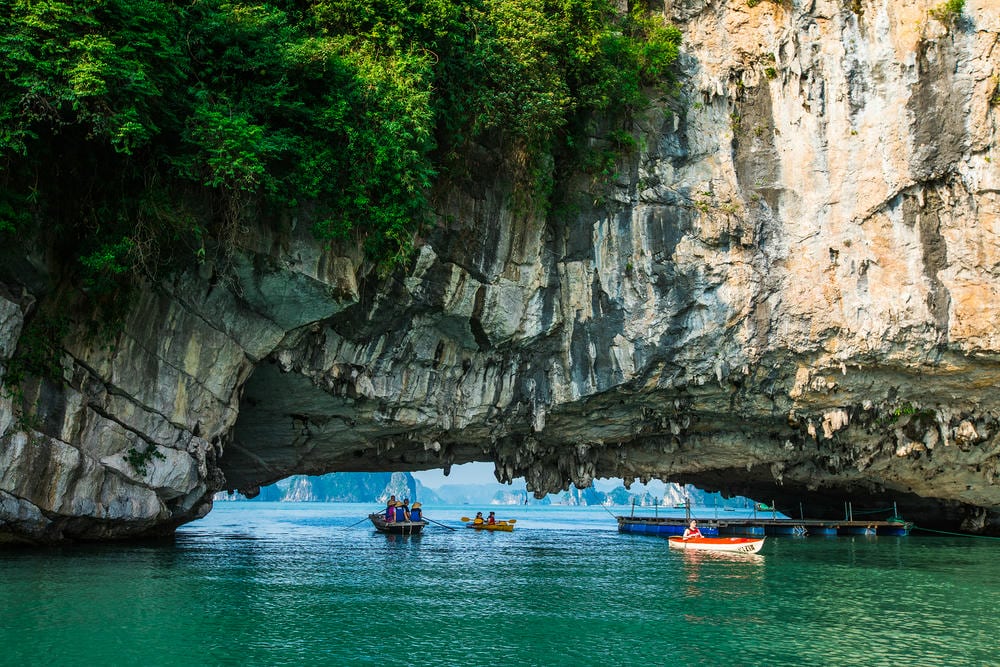
The geological formation of its limestone caves
The Ha Long area lies within an ancient limestone region more than 500 million years old. Over long periods of geological change, including the rise and fall of sea levels, natural weathering, and erosion, the limestone blocks were sculpted into countless caves with unique shapes. Each cave carries its own character, from grand halls to narrow, maze-like passages.
UNESCO-Recognized geological value
In 1994 and 2000, UNESCO recognized Ha Long Bay as a World Natural Heritage Site largely because of its exceptional geological and geomorphological value, with its cave system playing a key role. These caves are considered a “living geological museum,” recording the Earth’s natural evolution over millions of years.
Biodiversity & Natural beauty
The caves in Ha Long Bay host a surprisingly rich and delicate ecosystem. Inside, you may find small colonies of bats, swallows, crustaceans, and insects adapted to low-light environments, along with mosses and ferns that thrive in cool, humid conditions. The harmony of still water, soft lighting, and shimmering stalactites creates a mystical natural beauty, making each cave feel like a hidden world shaped by both time and life.
Read more: Where is Ha Long Bay in Vietnam? Full location guide
Top caves in Ha Long Bay you should visit
Ha Long Bay is home to dozens of extraordinary caves, each offering a different kind of beauty and exploration experience. From vast illuminated chambers to water-filled passages accessible only by kayak, every cave reveals a unique world of mystery and charm. Below are the most remarkable caves you should visit during your trip to Ha Long Bay.
Sung Sot Cave (Surprise Cave)

Sung Sot Cave impresses visitors right from the entrance, where a steep rocky slope leads into a space far larger than anyone expects. The cave has two main chambers, with the second resembling a massive “natural arena” featuring high ceilings and distinctively shaped stalactites that look like hand-carved sculptures. Artistic lighting enhances every layer of the rock surface, creating a dramatic and breathtaking scene that truly lives up to its name – “Surprise.”
Thien Cung Cave (Heavenly Palace Cave)
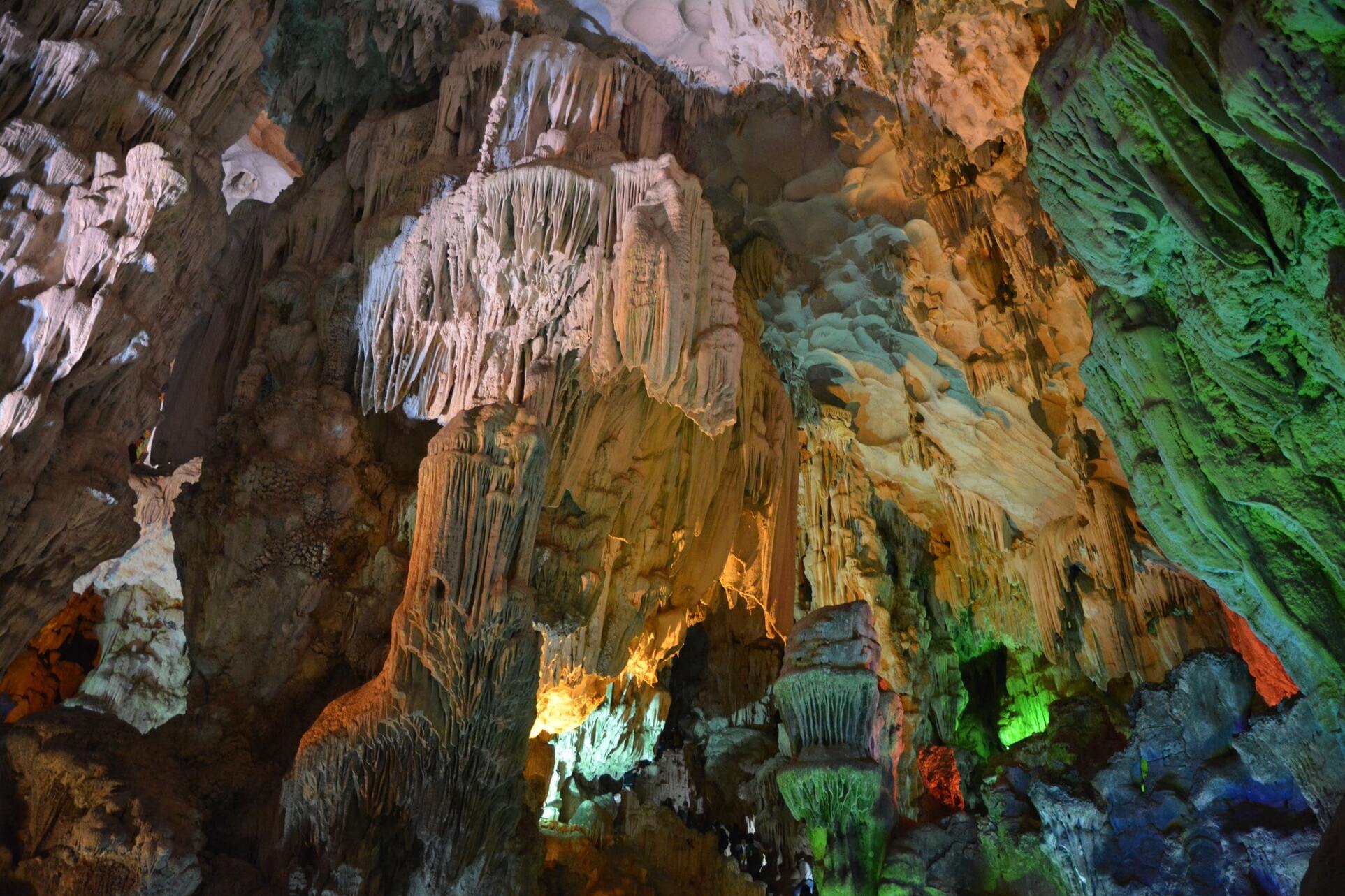
Thien Cung Cave captivates visitors with its intricate beauty, resembling an underground palace. Inside, stalactites and stalagmites form shapes reminiscent of celestial carvings, flowing stone curtains, and cascading mineral formations. The multi-layered structure combined with gently shifting lights creates the impression of stepping into a natural theater. The delicate, graceful patterns of its formations make this cave stand out among Ha Long’s dry caves.
Dau Go Cave (Wooden Stakes Cave)
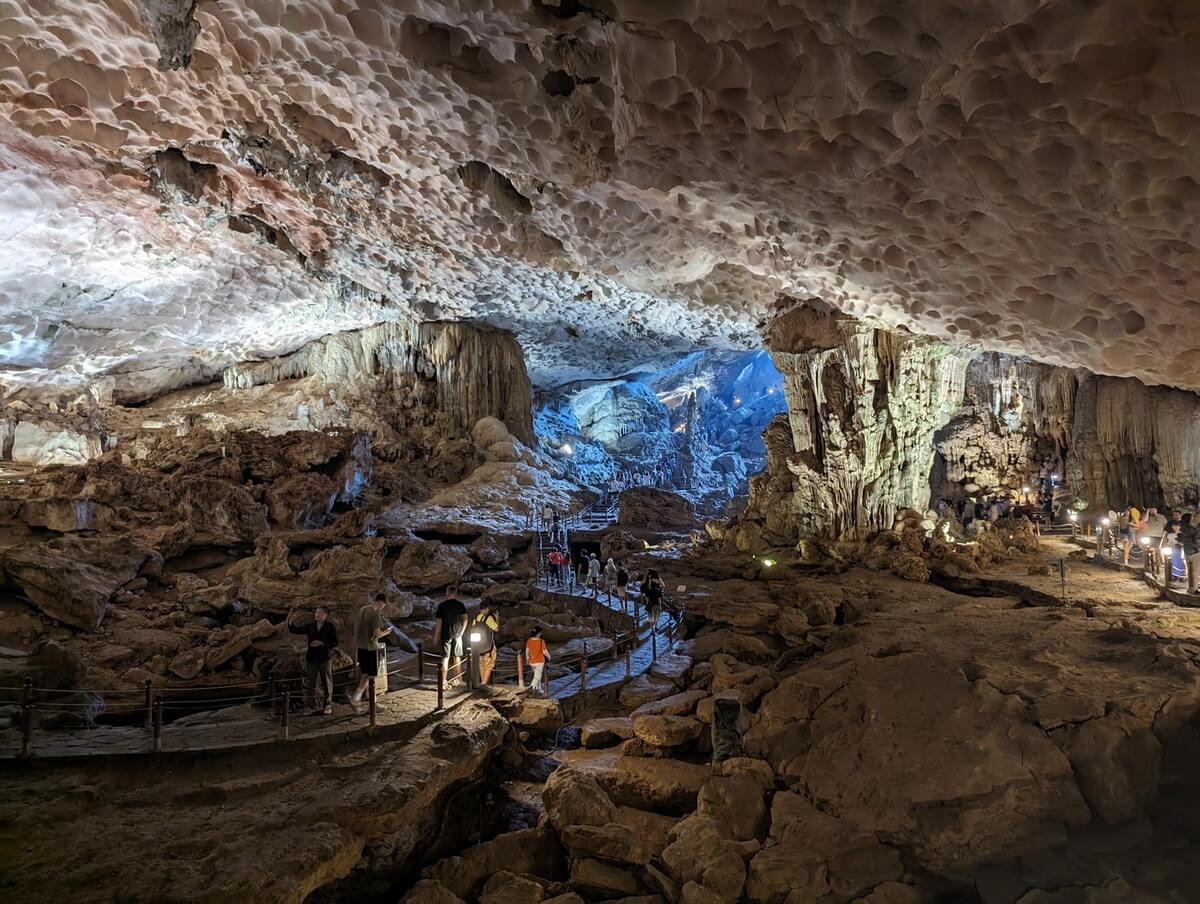
Dau Go Cave is known for its impressive scale, guiding visitors through three spacious chambers connected in sequence. What sets this cave apart are the enormous stone columns and towering stalagmite pillars that resemble ancient stone towers. The cave is also linked to the historic Bach Dang battle, believed to be the place where wooden stakes were once stored—adding a layer of cultural and historical significance that few other caves possess.
Luon Cave
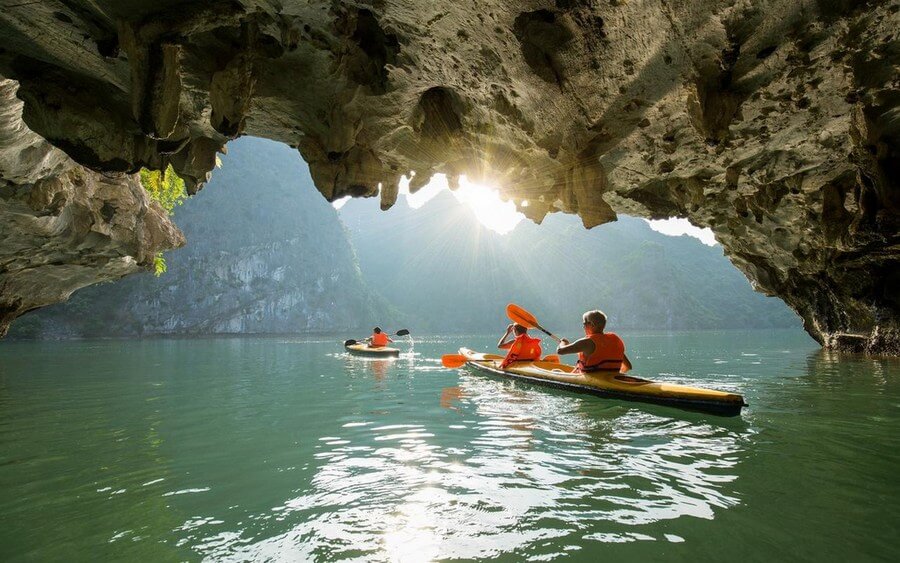
Unlike typical dry caves, Luon Cave is a water cave that can only be accessed by rowing boat or kayak. The low archway at the entrance leads into a serene emerald-colored lagoon surrounded by sheer cliffs. The peaceful atmosphere, crystal-clear water, and secluded setting create a gentle yet unforgettable experience, offering a calm escape from the outside world.
Me Cung Cave (Maze Cave)
Me Cung Cave intrigues visitors with its narrow entrance that opens into a complex network of interconnected chambers. Several passages lead upward to viewpoints overlooking a clear blue lake below, an extremely rare feature among caves in Ha Long Bay. Its multi-layered structure and winding pathways make exploration exciting, filled with constant surprises.
Kim Quy Cave (Golden Turtle Cave)
Kim Quy Cave draws attention with stalactite formations that resemble turtle shells, turtle heads, and other motifs tied to Vietnamese legends. The long, narrow passage allows natural light to filter through cracks in the rock, creating magical reflections along the cave walls. Its connection to folklore gives this cave a distinctive charm rich in cultural meaning.
Read more: Halong Food Guide: Must-Try Seafood Dishes in Halong Bay
Caves in Lan Ha Bay & Bai Tu Long Bay
Not only Ha Long Bay, but the surrounding areas such as Lan Ha Bay and Bai Tu Long Bay are also home to stunning cave formations. These regions are quieter, less commercialized, and retain a remarkable level of natural purity, making them ideal for travelers seeking a more peaceful and authentic exploration of limestone landscapes.
Dark & Bright Cave, Lan Ha Bay
Dark & Bright Cave is one of the most iconic stops in Lan Ha Bay, offering a serene and immersive experience as visitors paddle through clear emerald waters by kayak or rowboat. The entrance to Dark Cave is low, leading into an interior completely enveloped in darkness, creating a mysterious and untouched atmosphere similar to a natural tunnel carved beneath towering limestone cliffs. When faint light reflects off the water, it reveals uniquely deep shades of green that define the cave’s character.
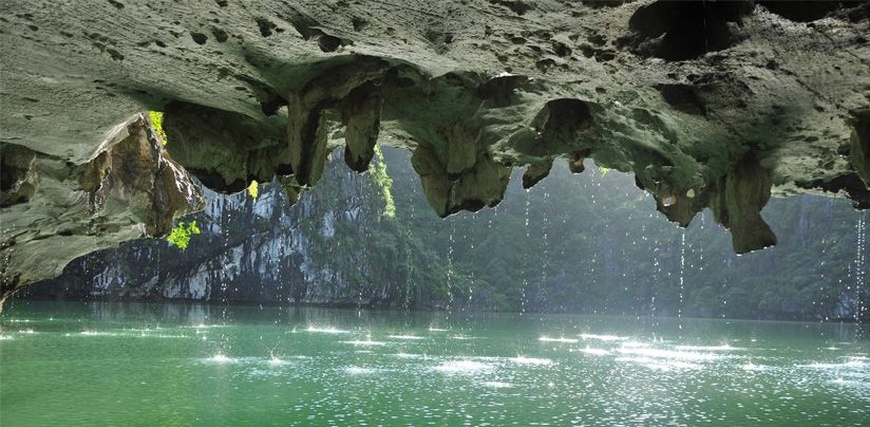
In contrast, Bright Cave opens into a spacious, sunlit lagoon with crystal-clear water surrounded by vertical cliffs. Sunbeams illuminate the surface, creating shimmering reflections that make the scenery glow with softness and elegance. The compelling shift from complete darkness to radiant light is what makes the Dark & Bright Cave experience so captivating, offering a dynamic blend of mystery and beauty.
Thien Canh Son Cave, Bai Tu Long Bay
Located in the quieter expanse of Bai Tu Long Bay, Thien Canh Son Cave is known for its graceful and pristine charm. The path leading to the cave winds along a rocky hillside covered in greenery, eventually opening into a spacious chamber with a high ceiling and gentle natural light reflecting off the rock surfaces. Inside, the stalactites and stalagmites form distinct shapes reminiscent of flowers, animals, and traditional motifs, creating a vivid natural artwork carved entirely by time.

Because it lies far from the bustling center of Ha Long tourism, the cave maintains a peaceful atmosphere and avoids heavy crowds. Its wide, flat interior makes it easy to explore, which is why it is a popular stop for families and travelers looking for a calm and unhurried experience. Many premium cruises choose this cave as part of their itinerary thanks to its harmonious blend of limestone formations, foliage, and tranquil surroundings.
How to visit these caves in Ha Long Bay
Visiting caves in Ha Long Bay is straightforward, but the best approach depends on your schedule, budget, and how deep you want to explore. Most famous caves are included in standard cruise routes, while water caves require smaller boats or kayaking to access. Below are the most common and practical ways to visit Ha Long Bay’s caves.
By overnight cruise
An overnight cruise is the most convenient way to explore multiple caves without rushing. Cruises typically include guided cave visits as part of a structured itinerary, with transportation between sites handled for you. This option also lets you reach areas farther from the mainland and enjoy quieter moments at popular caves outside peak daytime crowds.

If you’re looking for a premium yet comfortable option, Grand Pioneers Cruises offers well-designed itineraries that include cave visits, spacious cabins, and a smooth, well-organized schedule. Booking with Grand Pioneers ensures you can discover Ha Long Bay’s caves with expert guidance while enjoying high-quality onboard service throughout your journey.
By day cruise
If you have limited time, a day cruise is a good way to visit one or two major caves in a single trip. Day tours usually depart from Ha Long City or Tuan Chau Harbor and follow a fixed route that includes a main cave stop (such as Sung Sot Cave or Thien Cung Cave). It’s a practical choice for first-time visitors who want highlights without staying overnight.
By kayaking or rowing boat

Some caves, especially water caves like Luon Cave, can only be accessed by kayak or a small rowing boat. This is often the most immersive way to experience the bay up close, allowing you to glide through low rock arches and enter hidden lagoons surrounded by limestone cliffs. Many cruises and day tours offer kayaking or rowing boat add-ons, depending on the route and conditions.
Best time for visiting caves in Ha Long Bay
Choosing the right time to explore the caves of Ha Long Bay will greatly enhance your experience, from weather conditions and lighting inside the caves to how crowded each site may be. Although the caves can be visited year-round, each season offers different advantages. Below is a detailed guide to help you pick the ideal time for your trip.
Spring (March – May) – The most ideal period
This is when the weather is stable with minimal rainfall and moderate humidity. Natural light inside the caves is pleasant, making it easier to admire stalactites and take photos. The mild temperature also makes climbing stairs and moving through the caves more comfortable.
Autumn (September – November) – Clear skies and great visibility
Autumn brings blue skies, gentle breezes, and excellent visibility. It is an ideal time to visit large caves like Sung Sot and Dau Go. With little rainfall, the cave floors stay drier, reducing the risk of slippery surfaces.
Winter (December – February) – Cool air and fewer crowds
Despite the cooler temperatures, cave exploration is still easy in winter. It is perfect for travelers who prefer quieter experiences. Occasionally, light fog may appear near cave entrances, making the atmosphere slightly more humid.
Summer (June – August) – Sunny but watch for sudden showers
Summer offers bright sunlight and clear water, ideal for water caves like Luon Cave. However, sudden rain or storms may occur. It’s best to visit caves in the morning or late afternoon to avoid midday heat while climbing to cave entrances.
FAQs about the best time to visit caves in Ha Long Bay
To help you prepare better for your cave-exploring journey in Ha Long Bay, here are the most frequently asked questions. These answers will guide you in choosing the right season, day, and time to enjoy your visit without weather disruptions or large crowds.
1. Can you visit caves in Ha Long Bay year-round?
Yes. All caves are open throughout the year, but spring and autumn offer the most comfortable experience.
2. Which season is the most crowded?
From October to April, especially late autumn and early winter, caves receive the highest number of international visitors. For a quieter experience, winter or early summer is a good choice.
3. Is summer a good time to visit water caves?
Yes, summer is excellent for water caves like Luon Cave due to clear water and sunny weather. However, it’s important to check weather forecasts to avoid storms.
4. Does rain affect cave visits?
Light rain usually does not affect cave access, but heavy rain may make paths slippery. For water caves, kayaking may be suspended during bad weather.
5. What is the best time of day to enter the caves?
Morning or early afternoon is ideal due to better natural light, cooler temperatures, and fewer visitors.
The caves of Ha Long Bay embody the rich geological history and breathtaking natural artistry that make the bay a UNESCO World Heritage Site. Whether you venture into the vast chambers of Sung Sot Cave, glide through the tranquil waters of Luon Cave, each cave reveals a different story etched in stone. With the right timing, a well-planned itinerary, and a spirit of adventure, exploring these caves will become one of the most memorable highlights of your Ha Long Bay journey.